Chlorine Production by Seawater Electrolysis in Coastal Power Plants
The seawater electrolysis chlorination product for coastal power plants is a complete set of systems and terminal disinfectant that generates low-concentration sodium hypochlorite (NaClO) solution on-site through the electrolysis of seawater with electric energy. It is mainly applied to marine organism antifouling, sterilization and algae removal in the seawater cooling water system of power plants, ensuring the efficient and safe operation of equipment such as condensers and pipelines. It serves as the standard configuration for the circulating water systems of coastal thermal power plants and nuclear power plants.
Core Product (Sodium Hypochlorite Solution)
- Active Ingredient: Sodium Hypochlorite (NaClO). Available chlorine concentration is generally 0.8%~1.2% (8000~12000mg/L). It is a pale yellow liquid with a slight chlorine odor.
- Chemical Properties: Strong oxidizing property and broad-spectrum bactericidal effect. It can kill bacteria, algae, shellfish, larvae and other organisms in seawater, and inhibit the adhesion of biological slime.
- Generation Principle: Seawater (containing approximately 16000~19000mg/L of Cl⁻) flows through the electrolytic cell, and after direct current is applied:
Anode: 2Cl⁻ → Cl₂↑ + 2e⁻
Cathode: 2H₂O + 2e⁻ → H₂↑ + 2OH⁻
In solution: Cl₂ + 2NaOH → NaClO + NaCl + H₂O
System Composition (Complete Set of Equipment)
- Seawater Pretreatment Unit: Self-cleaning filter (removing impurities larger than 0.5mm), booster pump, and sand remover (removing sediment larger than 0.04mm), ensuring the cleanliness of inlet water to the electrolytic cell.
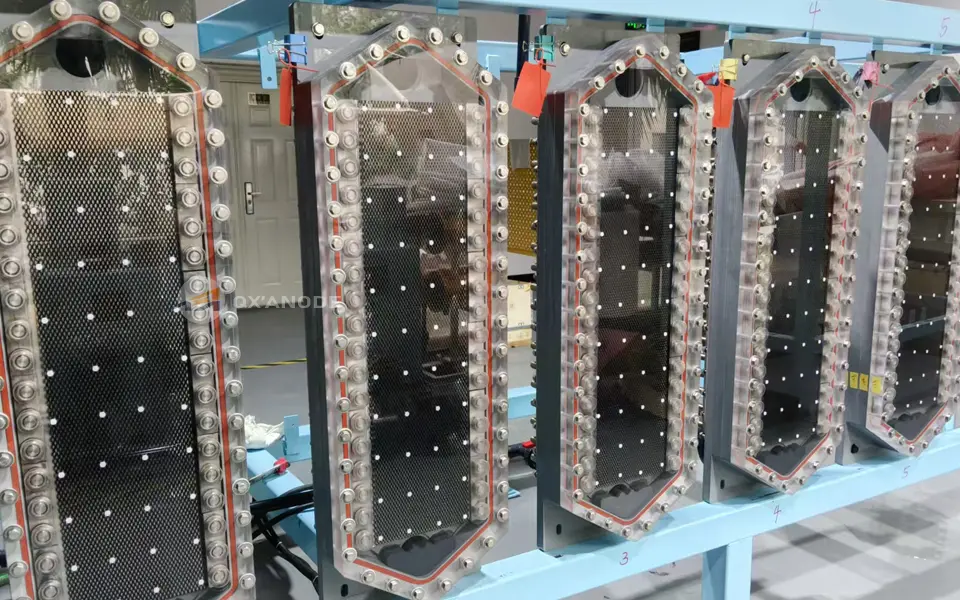
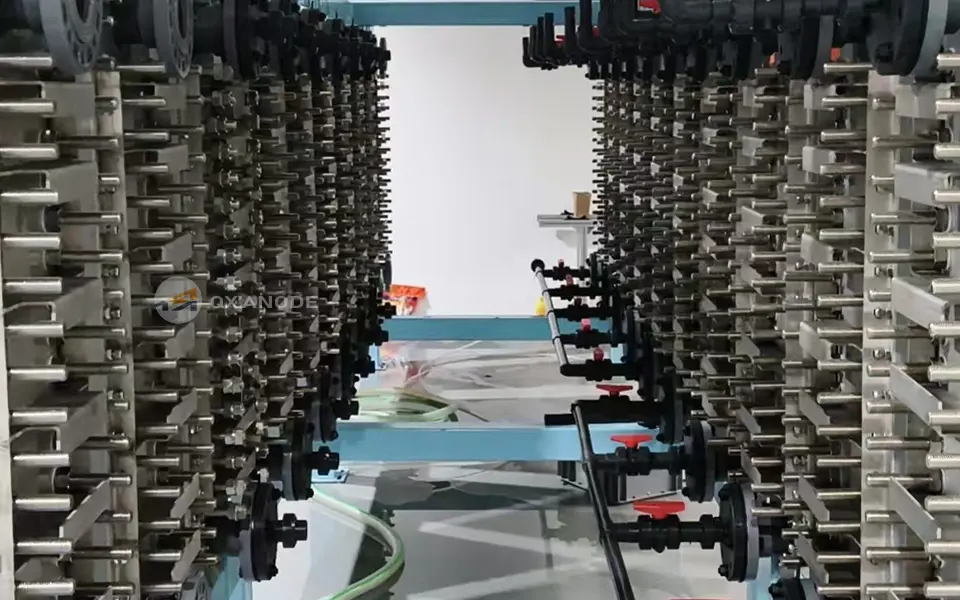
- Electrolytic Chlorine Generation Unit (Core):
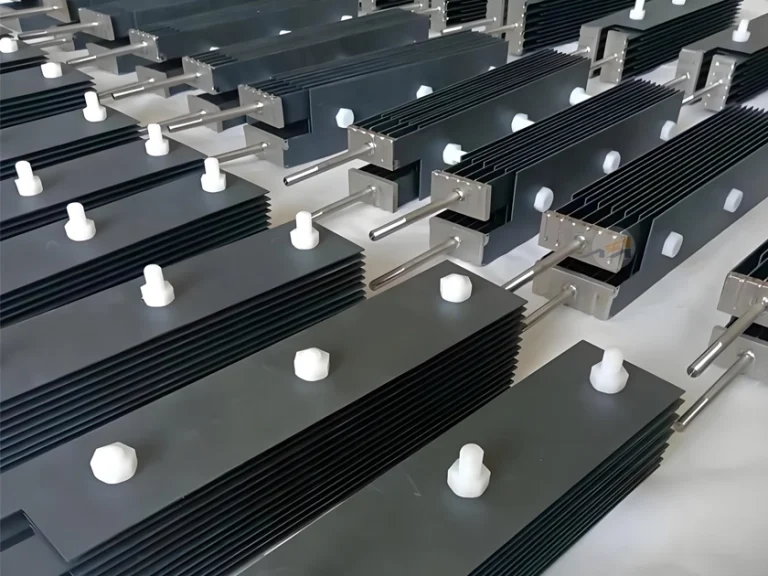
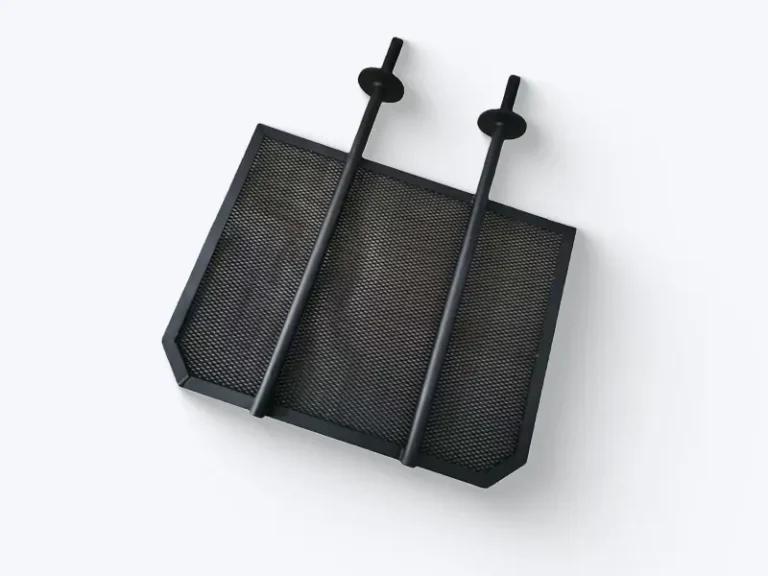
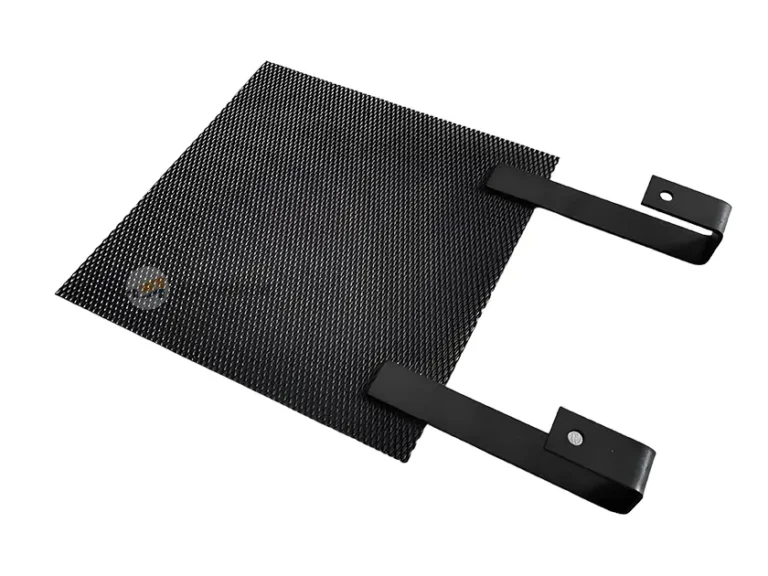
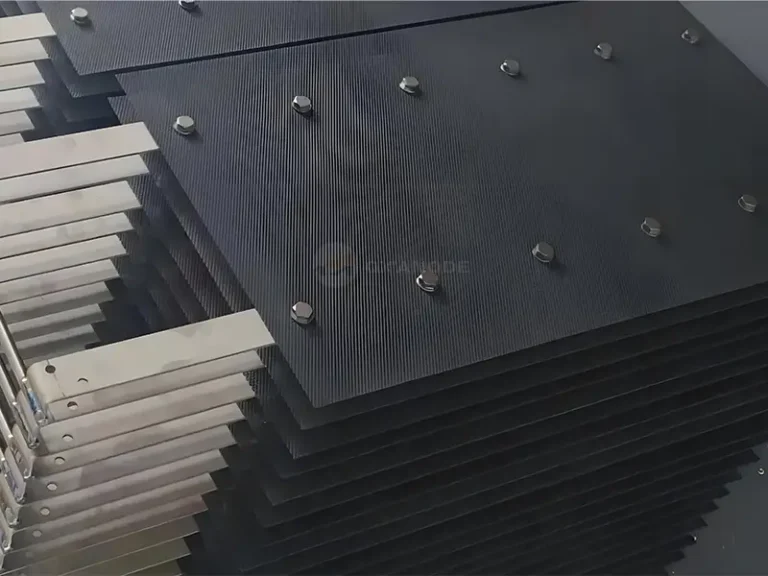
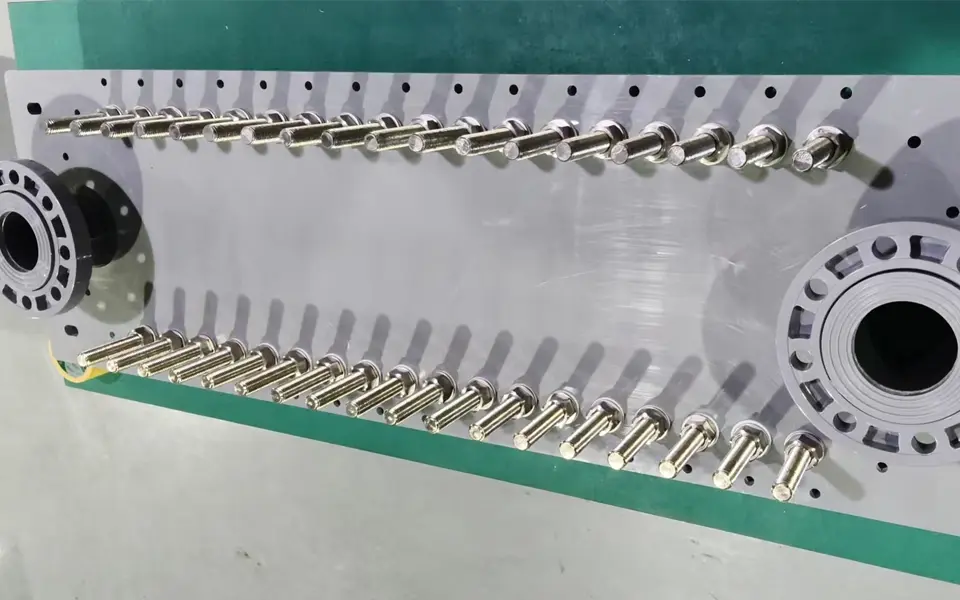
Electrolyzer: Titanium Substrate + Precious Metal Coated Electrode (DSA).
Modular Design: The effective chlorine output of a single cell ranges from 20 to 50 kg/h, and parallel connection of multiple cells can expand the output to 100 to 500 kg/h, adapting to different unit capacities. - Gas-Liquid Separation and Dosing Unit: Hydrogen/chlorine gas separation, sodium hypochlorite solution storage (1~5m³).
- Electric Control and Monitoring System: Fully automatic PLC control, real-time monitoring of current, voltage, flow rate and concentration, enabling unattended continuous operation.
Core Applications
Sterilization and algae removal, marine organism adhesion prevention for seawater once-through cooling / circulating cooling systems in power plants, protecting condenser copper tubes / titanium tubes, pipelines, filters and other facilities.
Extended Applications
Pretreatment of seawater desalination, disinfection of domestic water in the plant area, sterilization for wastewater treatment, antifouling of docks/offshore platforms, etc.