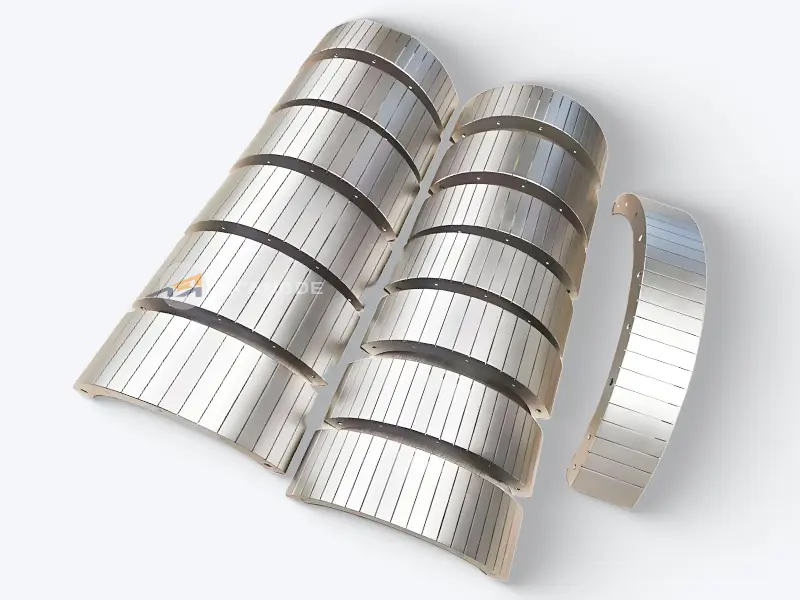
Platinum Coated Titanium Anodes
Hydrogen production by water electrolysis
In PEM water electrolysis for hydrogen production, platinum-plated titanium electrodes can effectively prevent hydrogen atoms from permeating into the titanium matrix, avoiding hydrogen embrittlement. The electrodes operate stably for more than 10,000 hours under a power range of 1.5-2kW.
In alkaline water electrolysis, the electrode formed by combining an ultrashort pulse laser-structured titanium surface with a sputter-deposited platinum catalyst has significantly increased the hydrogen evolution reaction activity by more than 40% through a substantial increase in specific surface area and a superhydrophilic design. This also accelerates the bubble detachment speed and significantly improves hydrogen production efficiency.
Electroplating and Metal Refining
In the precious metal electroplating industry, platinum-coated titanium electrodes serve as anodes to provide a stable current, ensuring the uniformity and purity of the coating. In the hydrometallurgy of non-ferrous metals, platinum-coated titanium electrodes are used in electrolytic purification processes, which can improve the purity of non-ferrous metals while reducing energy consumption.
Water treatment and wastewater treatment
In the field of water treatment, platinum-coated titanium electrodes are used as anodes for electrolytic disinfection and wastewater purification. They oxidize and decompose pollutants in water or electrolytes through electrochemical reactions. In industrial wastewater treatment, platinum-coated titanium electrodes can effectively remove pollutants such as cyanides and heavy metal ions. The current efficiency has increased from 62% in 2015 to 78% in 2023, and the treatment cost has been reduced by more than 30%.
As a high-performance electrochemical electrode material, platinum-coated titanium electrodes have become core components in modern industry and new energy fields through continuously innovative preparation technologies and expanded application scenarios. With the continuous development of low-platinum, alloying, and intelligent technologies, platinum-coated titanium electrodes will play an even more important role in green chemical engineering, clean energy, environmental monitoring, and other fields, providing strong technical support for global sustainable development. In the future, with the further optimization of preparation processes and the continuous expansion of application scenarios, the market scale and technical level of platinum-coated titanium electrodes will usher in greater room for improvement.
Platinum coated titanium electrodes, as a high-performance composite electrode material, combine the excellent mechanical strength and corrosion resistance of the titanium substrate with the superior electrocatalytic activity and electrical conductivity of the platinum coating, making them core components in fields such as water treatment, electroplating, and new energy. With the global growing demand for green chemicals and clean energy, the preparation technology and application scenarios of platinum-coated titanium electrodes are continuously expanding. Their market size reached approximately 1.2 billion US dollars in 2025 and is expected to continue expanding at a compound annual growth rate of 8.2% by 2030.
Preparation technology of platinum-coated titanium electrodes
The performance core of platinum coated titanium electrodes lies in the bonding force between the coating and the substrate, the uniformity of the coating, and the catalytic activity. Different preparation processes directly affect the final performance of the electrodes. Currently, the mainstream preparation technologies include thermal decomposition coating method, platinum electroplating, etc.
- Thermal decomposition coating method
The thermal decomposition coating method involves applying a platinum salt solution (such as chloroplatinic acid) to the surface of a pretreated titanium substrate, and then decomposing the platinum salt through high-temperature heat treatment (400-600°C) to form a platinum coating. This process has relatively low cost and is mainly used in ordinary pure water electrolysis applications. - Electroplating method
The electroplating method involves applying an electric current in a platinum containing electrolyte to reduce and deposit platinum ions on the surface of a titanium substrate, forming a coating. This process can precisely control the thickness and morphology of the coating by adjusting parameters such as current density and deposition time. The prepared electrode has excellent conductivity uniformity and is suitable for high-precision precious metal electroplating scenarios (such as gold plating of electronic components).