Dimensionally Stable Titanium Anode for ED Copper Foil Production Line
Electrolytic copper foil is a key basic material in fields such as printed circuit boards (PCBs), lithium-ion batteries, and high-frequency and high-speed electronic devices. Its thickness uniformity, surface quality, mechanical properties and electrical conductivity are highly dependent on the stable support of electrolytic processes and anode materials. As the core electrochemical component of electrolytic copper foil production lines, titanium anodes, featuring excellent corrosion resistance, electrocatalytic activity and dimensional stability, have become the preferred alternative to traditional lead anodes and graphite anodes. They are widely applied in the whole-process procedures including foil-forming electrolysis, surface roughening, curing and anti-rust treatment, helping enterprises stably produce high-quality electrolytic copper foil.
Working Principle of DSA Titanium Anode for Electrolytic Copper Foil
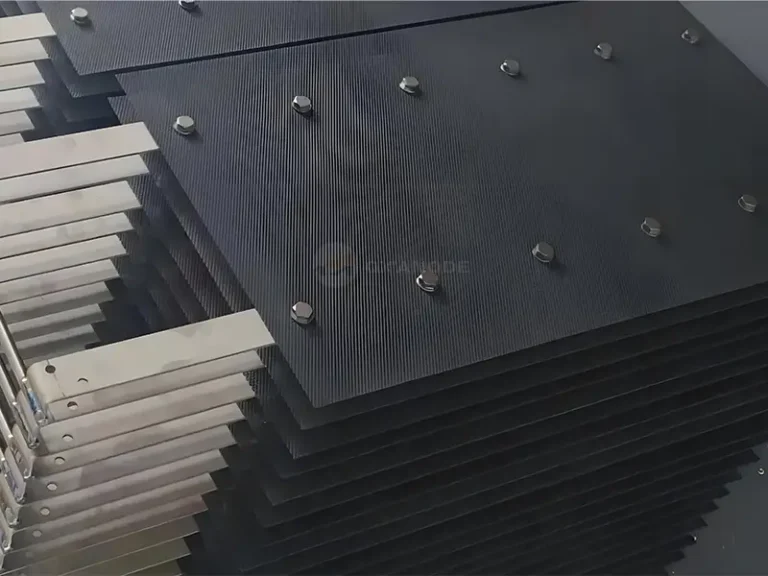
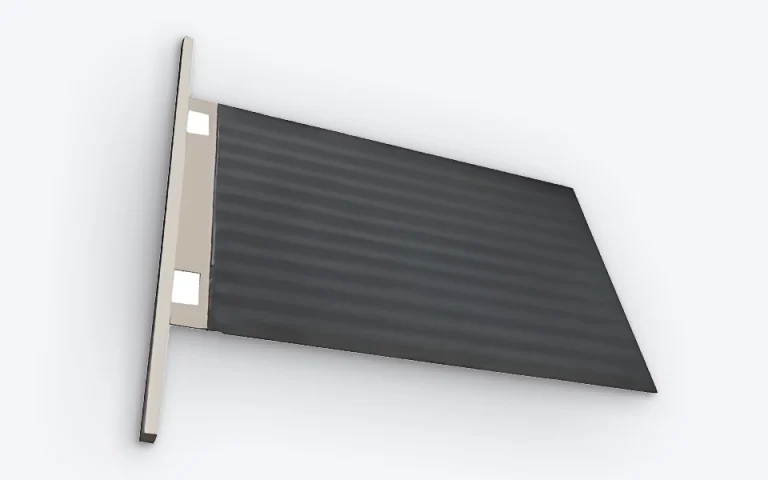
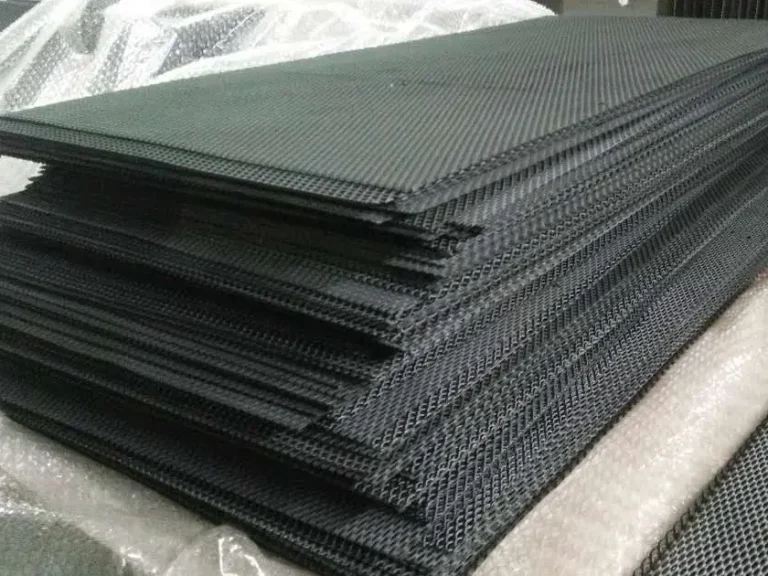
Titanium anodes for electrolytic copper foil belong to titanium-based Dimensionally Stable Anodes (DSA). They use industrial pure titanium as the substrate, with catalytic coatings of precious metal oxides such as iridium and tantalum applied on the surface. In copper sulfate-sulfuric acid system electrolytes, they undertake the anodic oxygen evolution reaction and ensure the orderly electrodeposition of copper ions at the cathode to form copper foil.

Core anode reaction: 2H₂O − 4e⁻ → O₂↑ + 4H⁺
Functional values: stabilizing electric field, uniformizing current, inhibiting side reactions, reducing cell voltage, extending service life, and improving copper foil consistency.
Characteristics of DSA Titanium Anode for Electrolytic Copper Foil
- Excellent corrosion resistance, suitable for strong acid and high-temperature working conditions
A dense oxide film forms on the titanium substrate in an acidic electrolyte, enabling it to withstand high-concentration sulfuric acid, high temperatures and strong electrochemical corrosion environments. It is insoluble and hardly contaminates the electrolyte, which helps maintain the purity of copper foil and the cleanliness of the electrolyte. - Excellent electrocatalytic performance and reduced energy consumption
Precious metal oxide coatings feature a low oxygen evolution overpotential and stable electrocatalytic activity, which can significantly reduce cell voltage, improve current efficiency, help enterprises cut power consumption per unit product and optimize production costs. - Dimensional stability and uniform copper foil thickness
The anode structure features high rigidity, small deformation during long-term operation, and stable pole distance. It can effectively improve the current distribution on the cathode surface, reduce edge effects, enhance the thickness uniformity and surface density consistency of copper foil, and lower the reject rate. - Better comprehensive cost performance
Under conventional foil production and surface treatment working conditions, titanium anodes can achieve long-term continuous and stable operation with low frequency of shutdown maintenance; after the coating fails, the titanium substrate can be repaired and regenerated by recoating, reducing material consumption and replacement costs, and improving the comprehensive utilization efficiency of equipment. - Suitable for the production of various types of copper foil
It can adapt to different product processes such as standard electrolytic copper foil, special copper foil for lithium batteries, high-frequency circuit copper foil, high-temperature and high-elongation copper foil, and ultra-thin carrier copper foil. Through the optimization of coating formula and structure, it meets differentiated requirements including low roughness, high tensile strength, high elongation and high hydrophilicity.
Performance of DSA Titanium Anode for Electrolytic Copper Foil
- Substrate material: industrial pure titanium, featuring excellent mechanical strength and welding performance with reliable structure.
- Catalytic Coating: Iridium-tantalum precious metal oxide, featuring strong adhesion, resistance to peeling, and stable catalytic performance.
- Applicable current density: Compatible with high current density working conditions commonly used in the electrolytic copper foil industry.
- Applicable pole distance: Supports conventional pole distance design of 6–55mm, compatible with mainstream foil forming machines.
- Environmental Advantages: Lead-free pollution, reduced acid mist emission, improved operating environment, compliant with green production requirements.
Application Fields of DSA Titanium Anode for Electrolytic Copper Foil
- Electrolytic Copper Foil for Current Collectors of Lithium Battery Anodes (6–12μm Ultra-thin Lithium Battery Copper Foil).
- Standard Copper Foil and High-Frequency High-Speed Copper Foil for Printed Circuit Boards (PCB).
- High-temperature high-elongation copper foil, ultra-thin carrier copper foil.
Maintenance of DSA Titanium Anode for Electrolytic Copper Foil
- Ensure the pole pitch is uniform during installation and avoid damaging the coating by collision and impact.
- Control the impurity content in the electrolyte and reduce the erosion of the coating by harmful ions.
- Avoid long-term no-load, over-current and over-temperature operation to extend the service life of the anode.
- After the coating performance deteriorates, the product can be returned to the factory for recoating and repair to restore its service performance.
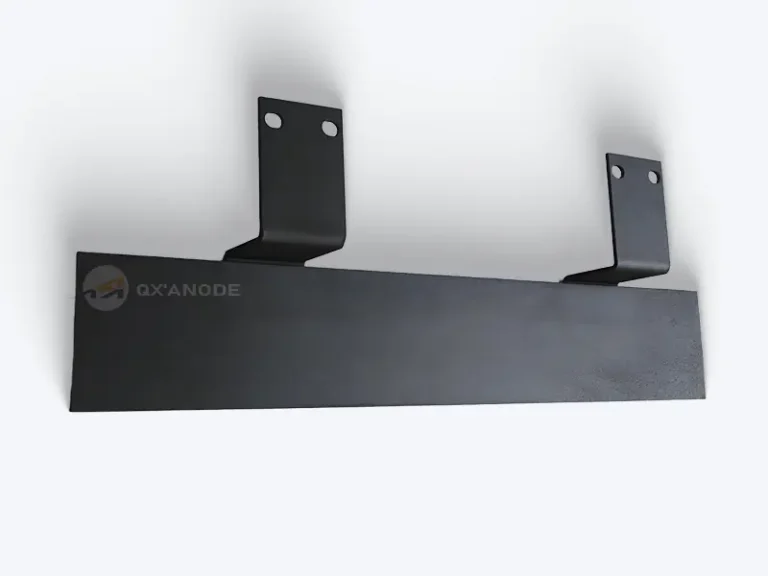
- Regularly inspect the appearance of the anode, conductive connections and sealing parts to ensure stable operation.
Titanium anodes for electrolytic copper foil are key components that improve copper foil quality, reduce production energy consumption, extend equipment service life and achieve green manufacturing. Boasting stable electrochemical performance, excellent corrosion resistance and dimensional stability, titanium anodes have become standard components in high-end electrolytic copper foil production lines, helping enterprises continuously enhance their competitiveness in rapidly developing fields such as lithium batteries and electronic circuits.